
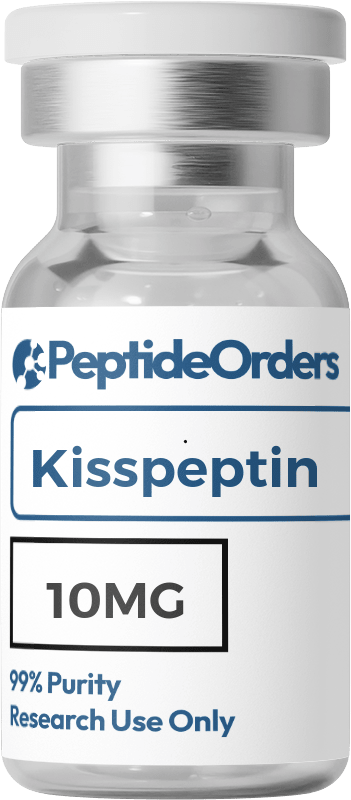
Kisspeptin-10 (KP-10), also known as Metastin (45–54), is the shortest biologically active fragment of the kisspeptin peptide family derived from the KISS1 gene. This decapeptide functions as a high-affinity agonist of the Kisspeptin receptor (KISS1R/GPR54) and is widely used as a research tool in neuroendocrine and reproductive signaling studies.
Kisspeptin-10 has been extensively studied for its role in regulating upstream signaling mechanisms that modulate gonadotropin-releasing hormone (GnRH) activity. Due to its minimal active sequence and well-characterized receptor interaction, KP-10 is frequently selected for controlled laboratory investigations requiring precise receptor activation.
Intended Use:
For Research Use Only (RUO). Not intended for diagnostic or therapeutic applications.
In experimental and preclinical research models, Kisspeptin-10 has been investigated for its role in a wide range of biological signaling pathways involved in endocrine regulation, neurobiology, and cellular communication. Current scientific literature suggests associations with the following physiological processes:
- Androgen-Related Signaling Pathways
Investigated for its role in the upstream regulation of gonadal hormone signaling, including pathways associated with testosterone modulation in endocrine research models. - Sex-Related Behavioral Signaling
Studied in relation to neural circuits involved in reproductive behavior, motivational signaling, and drive-associated neuroendocrine pathways. - Mood and Behavioral Regulation Pathways
Explored for its interaction with hypothalamic and limbic signaling networks associated with emotional regulation and behavioral responses. - Neurocognitive and Brain Function Research
Evaluated for its role in central nervous system signaling, neuronal communication, and cognitive-related peptide pathways. - Immune System Signaling Research
Investigated for potential interactions between endocrine peptides and immune-modulatory signaling cascades in experimental systems. - Cellular Aging and Tissue Integrity Pathways
Studied in relation to cellular turnover, oxidative stress signaling, and mechanisms associated with structural protein regulation and tissue maintenance. - Metabolic and Energy Balance Signaling
Explored for involvement in appetite regulation pathways, energy expenditure signaling, and metabolic feedback loops. - Fertility and Reproductive Axis Regulation
Extensively researched for its role in coordinating signaling within the hypothalamic–pituitary–gonadal (HPG) axis and fertility-associated regulatory mechanisms.